The expert
Dr. Matteo Auriemma
MD, PhD
Dermatologist
Cappelle Sul Tavo, Italy
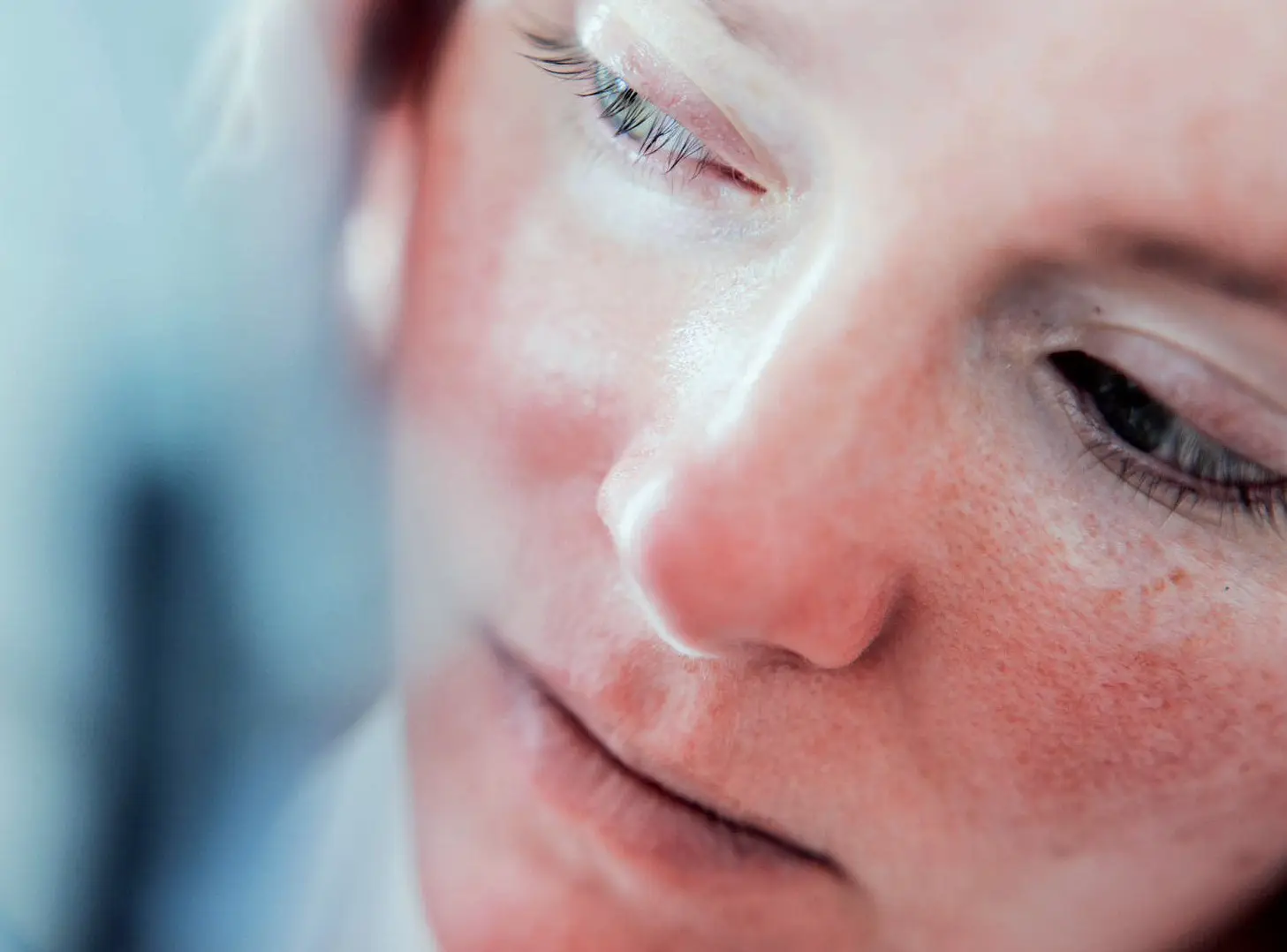
Rosacea is a chronic inflammatory disorder that, despite its prevalence, remains imperfectly understood. It is characterized by telangiectasia, transient or persistent erythema, papules and pustules on the central face. Recently Rosacea has been re-classified into four phenotypes: erythematotelangiectatic rosacea, papulopustular rosacea, phymatous rosacea, and ocular rosacea. Those phenotype can occur solely or in different combination and the current treatment state of the art suggest to address each lesion present in Rosacea patients. Facial erythema associated with rosacea negatively impact quality of life (QoL), self-esteem, and self-confidence, thus requiring a dedicated treatment. In this scenario, laser and light-based therapy are effective in reducing erythema and telangiectasia in rosacea patients. Several studies confirm that intense pulsed light (IPL) and pulsed dye laser (PDL) treatments were equally effective in treating rosacea. Beside, IPL is more widespread in dermatological and Medical Cosmetic settings compared to PDL for numerous reason among which cost.
However, while PDL treatments seem to be safer due to the specific wavelength able to interfere only with the vascular lesion specifically present in patients suffering of erythematotelangiectatic rosacea, some IPL devices, working within visible and infrared spectra and targeting hemoglobin and melanin, can achieve the same results of PDL with few or no side effects.
Here we report the case of three patients suffering of erythematotelangiectatic Rosacea, two of which treated with 2 session of IPL, on month apart, one treated only with one IPL session with prior application of amminolevulinic acid (ALA) for 1.5 hours in the dark as in classic Photo Dynamic Therapy (cPDT); a male of 52 y.o., phototype 2b, sun tanned and a female of 35 y.o., prototype 2b and a woman of 54 y.o.. An IPL handpiece was used, part of the MTONE platform, a multi-tech platform with IPL and laser handpieces, produced in Italy by M&T srl of Rimini. This platform allows a myriad of parameter settings, offering a high level of security in use; in fact the high cooling of the handpieces associated with the possibility of varying the pulses, their duration, their intensity, makes it possible to adapt the settings to the characteristics of each individual patient.
All of them showed a marked reduction of teleangiectasia and persistent and transient erythema after IPL treatments. In those three cases there was a minimum down-time with erythema lasting for no more of 2 days, no crusting, except for the patient pretreated with ALA, and minimal edema for a couple of days. QoL improved especially for the female patients which referred a reduction in make-up utilization. It is of worth to consider IPL as a possible treatment of Rosacea: in fact, although PDL seem to be the best choice in treating facial erythema, it may result too painful as a cosmetic procedure. On the contrary, this new IPL device can provide good result, close to the ones with PDL, without pain and with minimal crusting. Even in the case of IPL-cPDT for actinic keratosis, the treatment results in a marked reduction of vascularization and redness. As well, new technologies like Fractionated microneedle Radiofrequency seem to be too painful compared to IPL treatment and still need studies to provide its efficacy and safety.
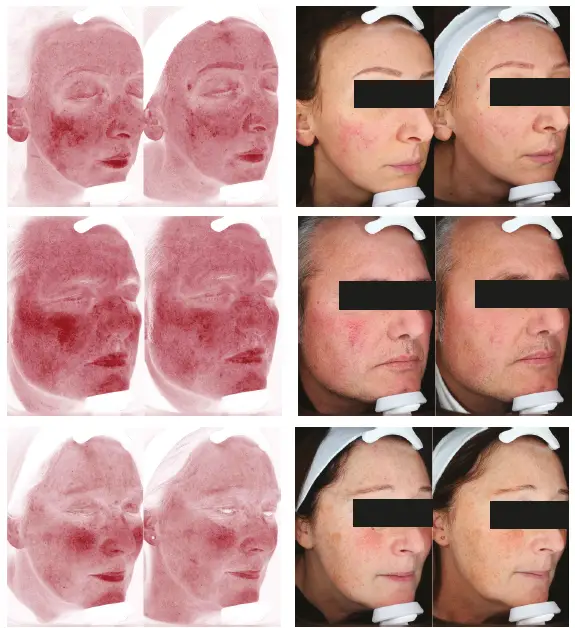
Above, some before and after images, obtainable with the method illustrated by dr. Auriemma, who is also the author of the photos
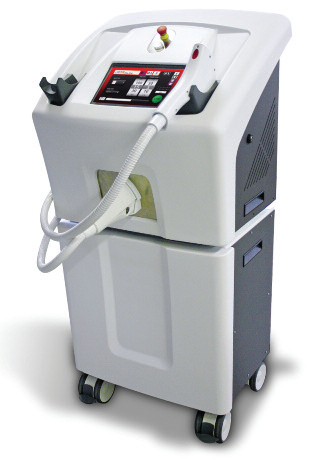
MT ONE (produced in Italy by M&T Srl, Rimi) is a multi-technology platform which combines Laser and IPL and has features modularity, compactness and versatility characteristics. Configurable with over 15 different handpieces, it combines Laser Diode 808nm, Laser Nd:YAG 1064nm, Erbium:YAG 2940nm, Er:GLASS 1540nm, Nd:YAG Q-Switched 1064/532 nm and several IPL handpieces (hair removal, vascular- pigmented lesions, skin rejuvenation, acne, skin lesions). It also incorporates a dual contact cooling technology, the Sub Zero Effect system, which allows to choose the cooling temperature of the handpieces, from 0 °C to -12 °C (from 32 °F to 10,4 °F). In synergy with the advanced cooling, it has the APC (Adaptive Pulse Control) system for managing energy pulses, allowing the treatment of all skin types, even dark and tanned.